
WEATHERED
HUMANS
Once I got past puckering on blue trails, skiing was the first way I consistently found flow. The first time I connected the wind blowing in my face with a sense of cleansing and relief. Associated the ache in my legs to a clear desire to get stronger: to fly more freely and reach taller peaks. The first time I witnessed the unmistakable link between willingly suffering and growth.
It makes perfect sense to focus on skiing as a primary mode to reconnect with our bodies through such a thrilling, ethereal, beautiful, specific mode of travel. Backed by copious research, the benefits of nature immersion (Berman et al., 2024; Lim et al., 2020), physical exertion (Liu et al., 2024; Arida & Teixeira-Machado, 2021), and challenge make us more resilient, regulated humans (Zhang et al., 2025). Considered emotional elasticity, I would wager that resilient humans seek challenges and grow more empathetic and self-efficacious through such trials. Countless days caught in shit weather deep in the woods, sucking wind pushing bikes up steep hills, crying on chairlifts, shivering and heaving for air after being thrown in heavy waves, screaming into the abyss. My girlish veneer and makeup smudged into a cracked, weathered, capable woman.
Thelma and Louise-esque (sans armed robbery and exploding tankers), I left home doe-eyed and dolled-up and wandered into the woods. Growing more wind-whipped and wild with every pass round the sun.
Where words fail, the vastness of nature fills the void. Nature models balance and regulation - maybe not in the ways of polite society, but she shows us when things are out of whack. This runs true in human psychology, too. When a person has stuffed and bottled emotions for too long, an outburst is inevitable. Quick experiment: fill your tea kettle to the brim, batten the hatches, and set that puppy to boil. You know what comes next. The inverse, never facing the heat won’t solve anything either. Regulation is not numbing or negating the natural waves of emotions that arise with life. Rather, it is flowing with. Learning to name, witness, allow, and release the energy that so many of us have been taught to cling to. Men, anger. Women, grief. God forbid we see a man sad or a woman furious. Gasp!
So, regulation. Lots of hot buzz terms on the interwebs these days. Sympathetic, parasympathetic, polyvagal theory, oh my! Perhaps you recall an elementary explanation of fight / flight / freeze. We see this response in animals (you and me baby, ain’t nothing but mammals) but haven’t evolved to construct societies that support the deactivation of our hypo or hyper-regulated states. Where hypo-regulation is numbing out of shutting down and hyper-regulation is the opposite end of the spectrum, agitation, activation, anxiety or anger.
Cue rabbit hole tangent to the U.S. and Capitalist normalization of stress, business, doing. We’re not good consumers if we’re not stressed out and reactive, anxious, or numbing out. What a concept - to be regulated: present, engaged, not seeking external stimulation or validation. Sounds like quite a peaceful way to move through the world. This is the goal of emotional regulation. Not to ignore the water in the kettle, avoid the heat, or empty it of its contents. Emotions are a natural, beautiful aspect of being embodied. Isn’t it time we accept that and dive into the water? It’s quite nice once you learn to swim.
Interested in swimming lessons? Go challenge yourself. Lean into the challenge of it and trust the process. Adam Grant notes that “resilience is not resistance to suffering. It’s the capacity to bend without breaking” (Grant, 2025). Research finds that performing endurance-based challenges brings determination and self-resolve to other realms (Diotaiuti et al., 2021; Harrison et al., 2021). Want to improve your work flow? Train for a marathon. Trying to deepen your relationships? Learn a new language. Doing hard things makes us more flexible, empathetic, . More accommodating to the suffering that’s inevitable in bodies, in this simulation, in this timeline.
Go forth and willingly suffer, friends. Preferably in nature, with good weather and friends, and even better snacks.
REFERENCES:
Arida, R. M., & Teixeira-Machado, L. (2021). The contribution of physical exercise to brain resilience. Frontiers in Behavioral Neuroscience, 14, 626769. https://doi.org/10.3389/fnbeh.2020.626769
Berman, M. G., et al. (2024). Immersion in nature enhances neural indices of executive attention. Scientific Reports, 14, Article 52205. https://doi.org/10.1038/s41598-024-52205-1
Diotaiuti, P., Corrado, S., Mancone, S., & Falese, L. (2021). Resilience in the endurance runner: The role of self-regulatory modes and basic psychological needs. Frontiers in Psychology, 12, 7815764.
Grant, A. (2025). Note. Substack. https://substack.com/@adamgrant/note/c-118965706
Harrison, D., Sarkar, M., Saward, C., & Sunderland, C. (2021). Exploration of psychological resilience during a 25-day endurance challenge in an extreme environment. International Journal of Environmental Research and Public Health, 18(23), 12476.
Lim, P. Y., Dillon, D., & Chew, P. K. H. (2020). A guide to nature immersion: Psychological and physiological benefits. International Journal of Environmental Research and Public Health, 17(16), 5989. https://doi.org/10.3390/ijerph17165989
Liu, R., Menhas, R., & Saqib, Z. A. (2024). Does physical activity influence health behavior, mental health, and psychological resilience? Frontiers in Psychology, 15, 1349880. https://doi.org/10.3389/fpsyg.2024.1349880
Zhang, X., et al. (2025). Transforming physical exertion into emotional agility via sequential empowerment of resilience and self-belief. Scientific Reports, 15, Article 24273. https://doi.org/10.1038/s41598-025-24273-4
april 16, 2026
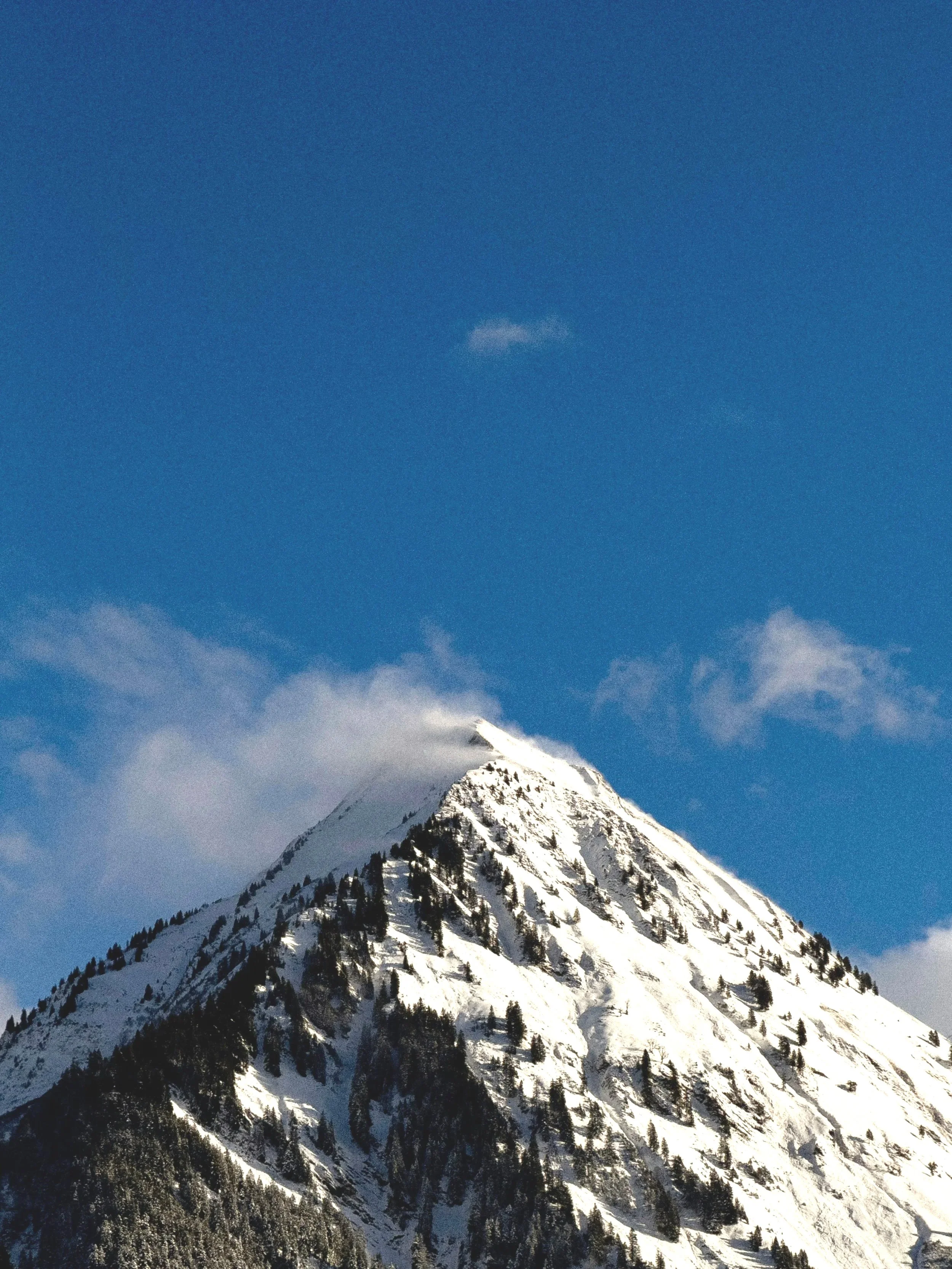
photo from stepan vynarchyk via unsplash